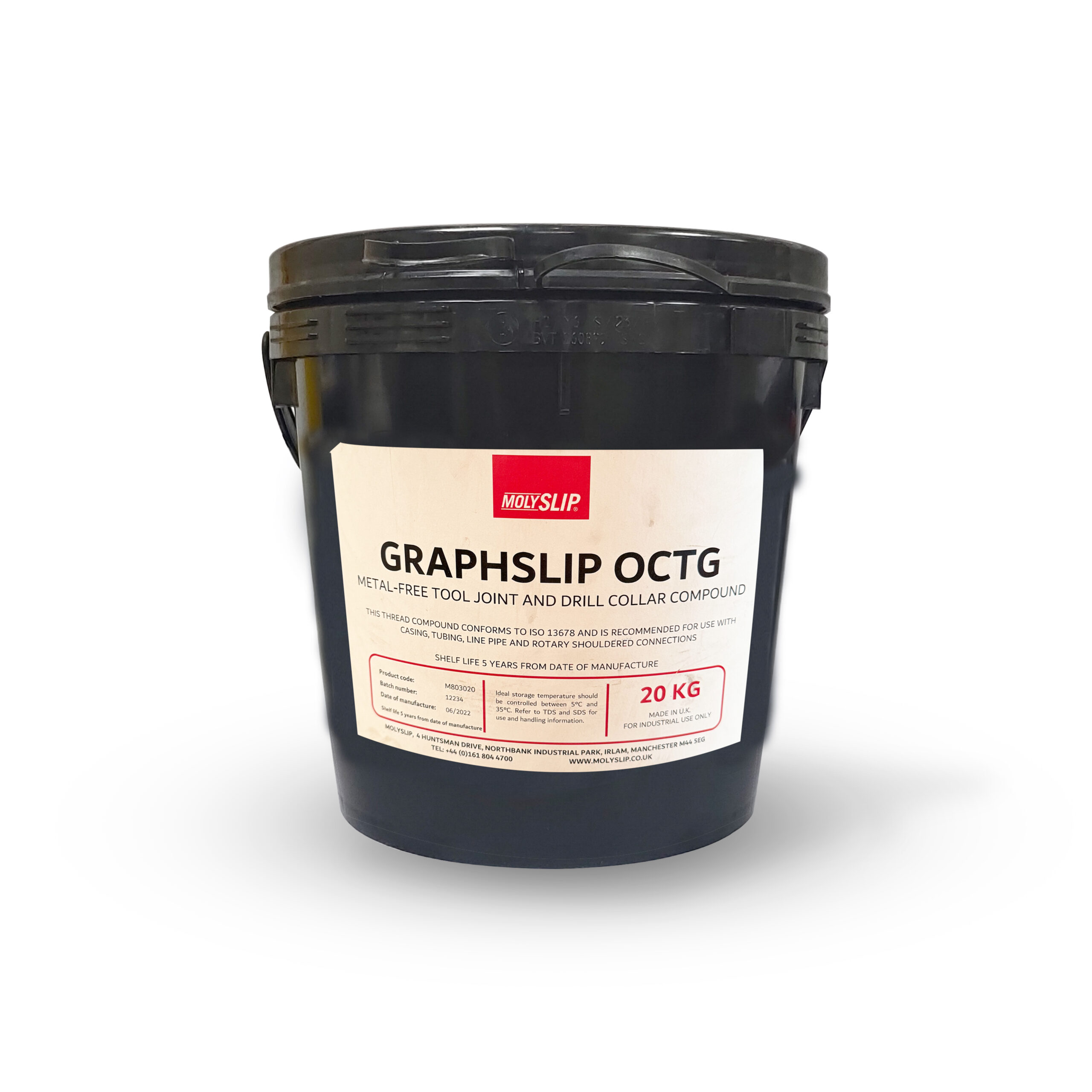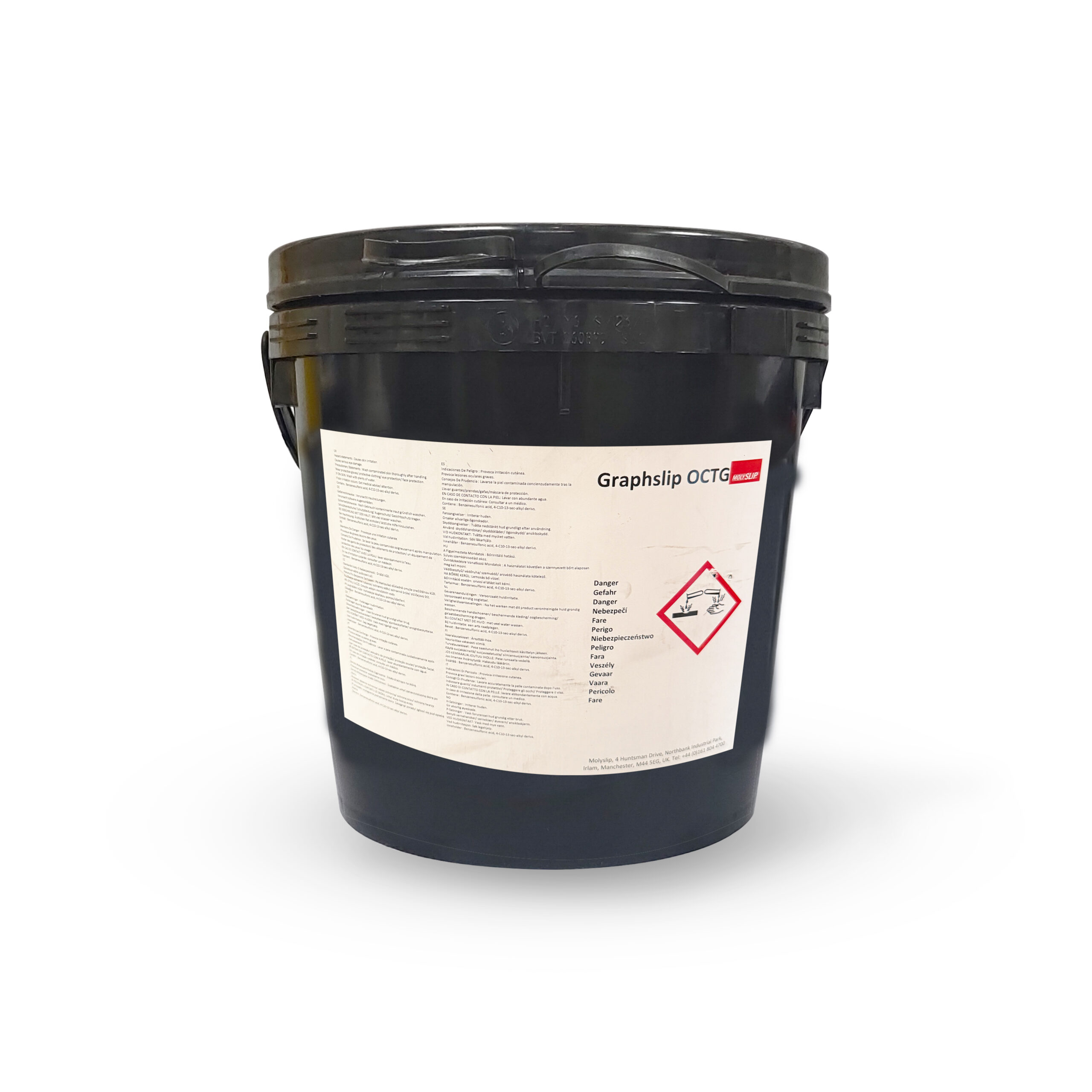
Molyslip® GRAPHSLIP OCTG is a premium performance, metal-free, tool joint & drill collar compound based on highly refined low sulphur, low pour point mineral oil thickened with calcium sulphonate complex soap. The product contains both graphite and a unique blend of solid lubricants coupled with high levels of corrosion inhibitors, anti-oxidant and anti-wear additives that make it particularly suitable for use under the most aggressive conditions in corrosive wet/humid, dirty or chemical environments where a high degree of water washout resistance is required.
Molyslip® GRAPHSLIP OCTG has excellent lubricating and anti-wear properties to reduce friction during assembly preventing ‘pick-up’, galling and seizure facilitating easier breakout for routine maintenance. The product is formulated to meet the requirements of *API RP 5A3 / ISO 13678:2010.
Molyslip® GRAPHSLIP OCTG is effective over a wide temperature range and is specifically designed to prevent seizure of threaded connections and ‘cold welding’ of rotary shoulder/drill collar/tool joint connections on oilfield equipment such as drill strings, casings, production tools and tubing etc. The specially formulated blend of additives provides enhanced adhesion to cold/wet tooling and a high resistance to wash off whilst being thermally stable making it suitable for use in applications where high temperatures are encountered.
Your one-stop shop for all trading needs
Your one-stop shop for all trading needs
Copyright © 2025 Una Eco Trading, All rights reserved.
Copyright © 2024 UNA General Trading, All rights reserved. Powered by Insprago
WhatsApp us