
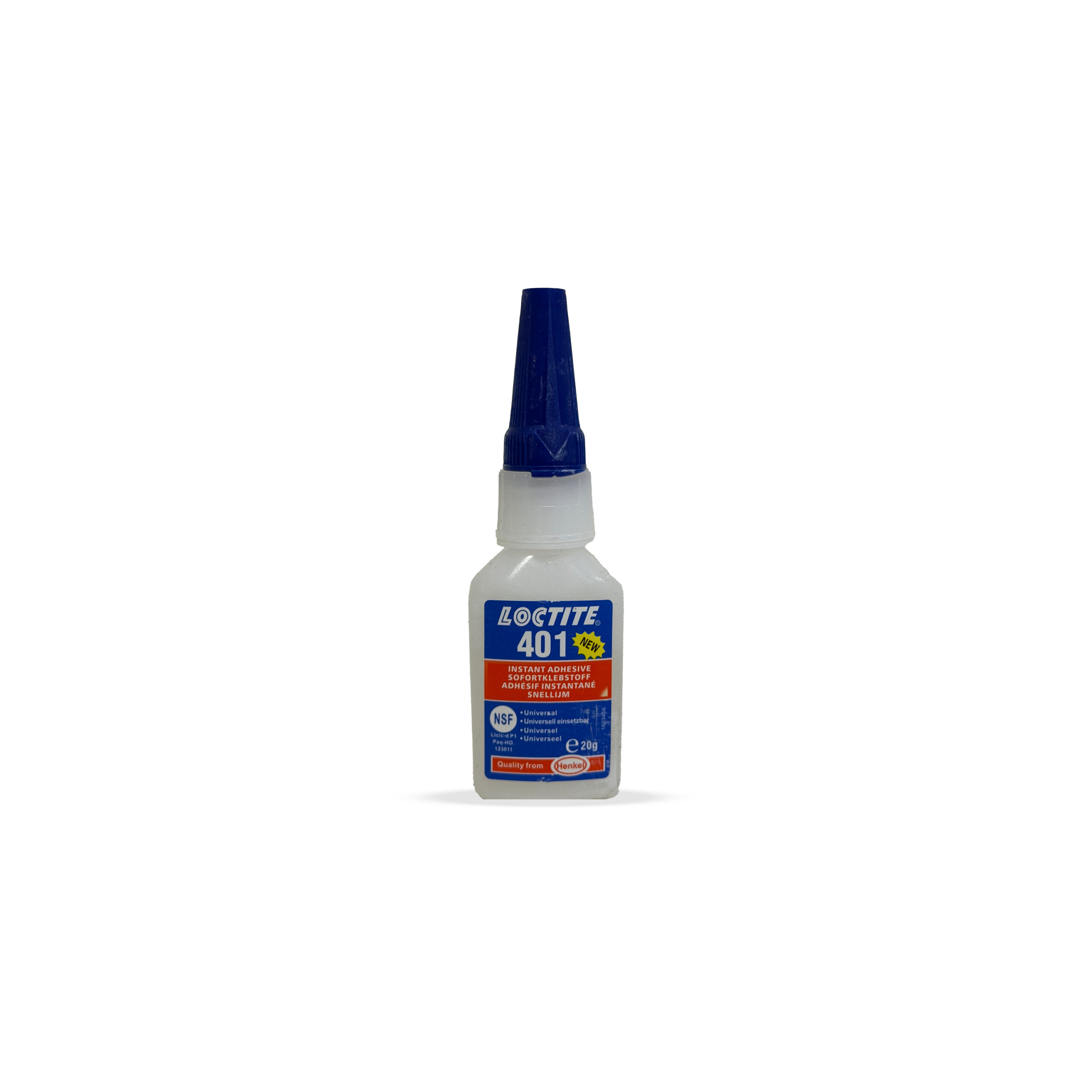
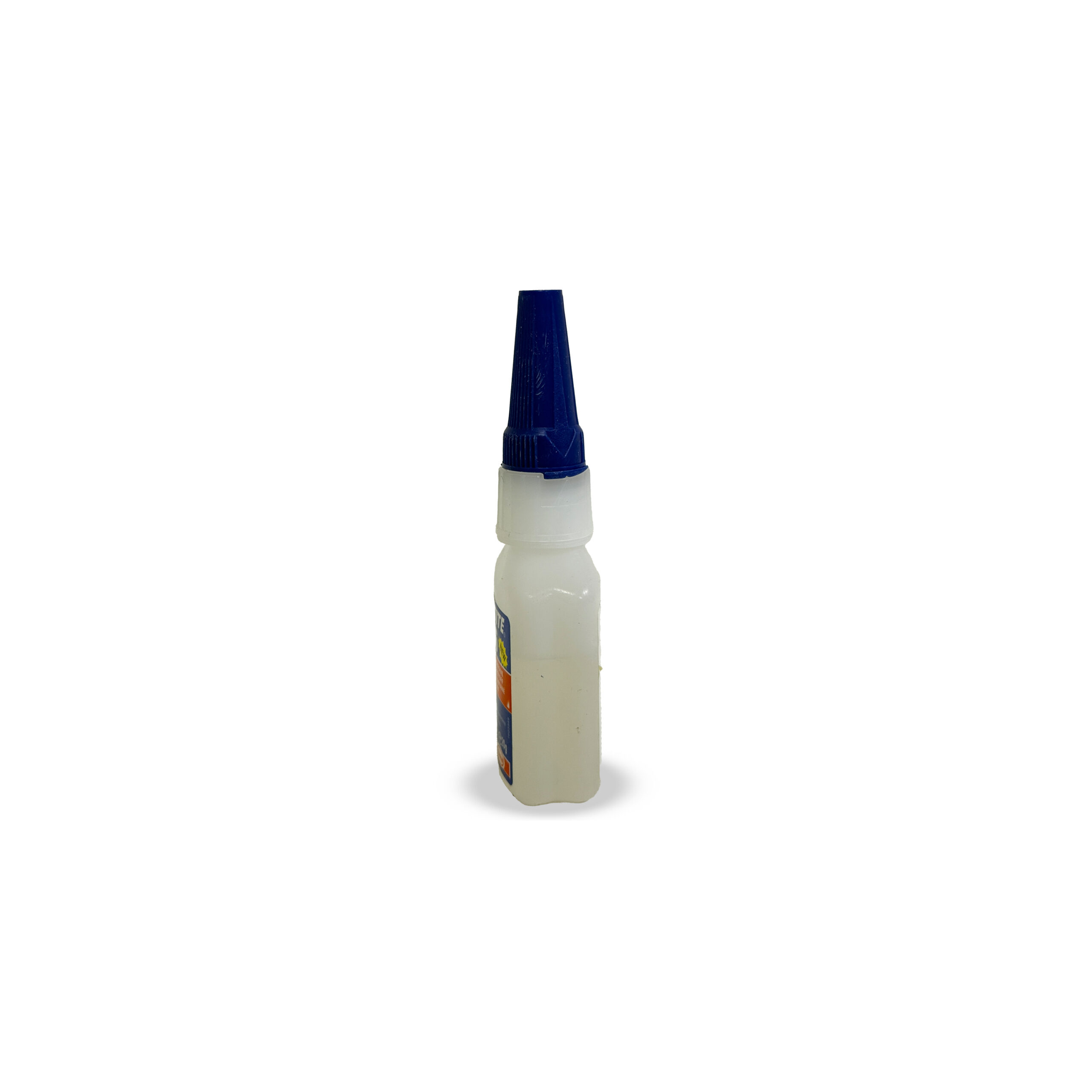
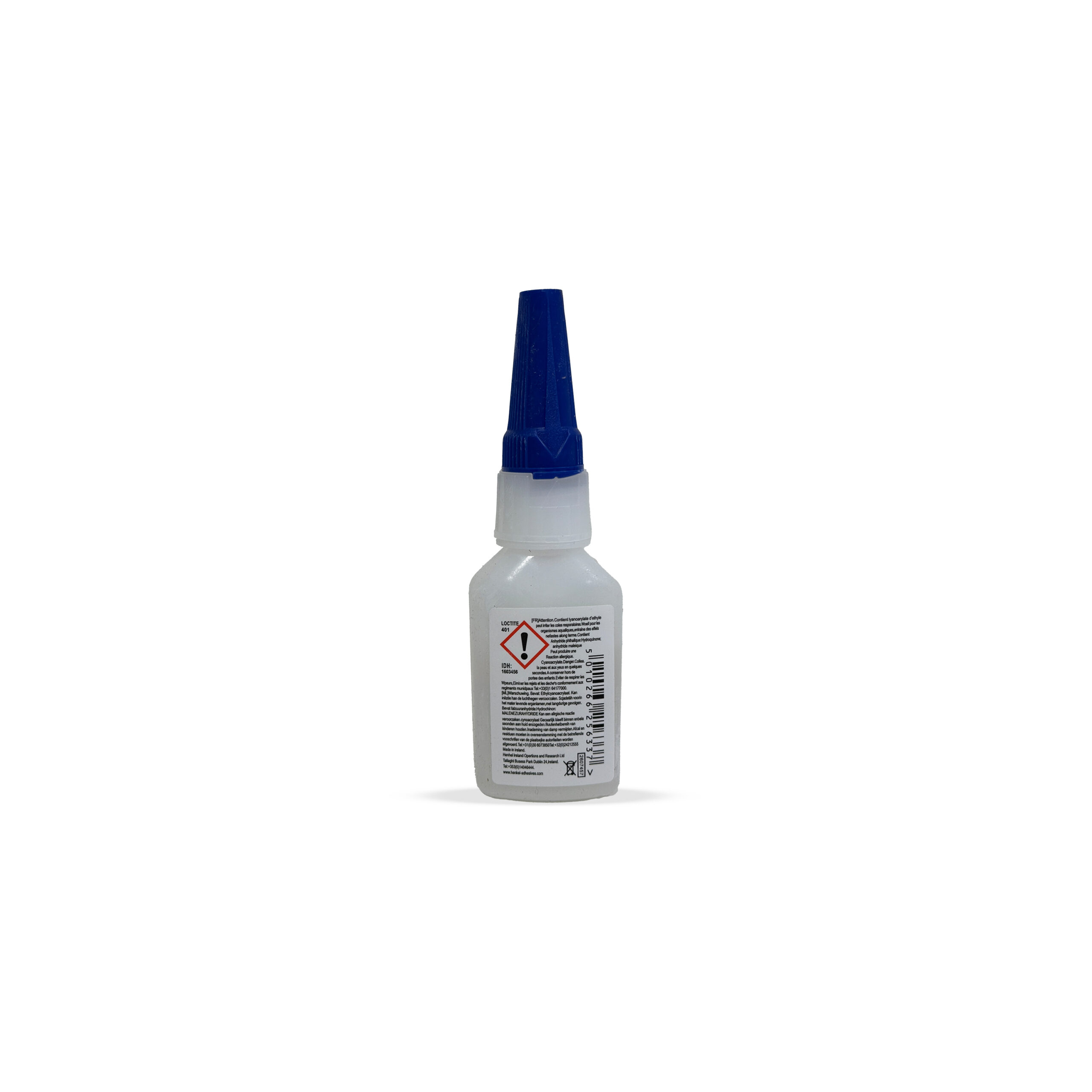
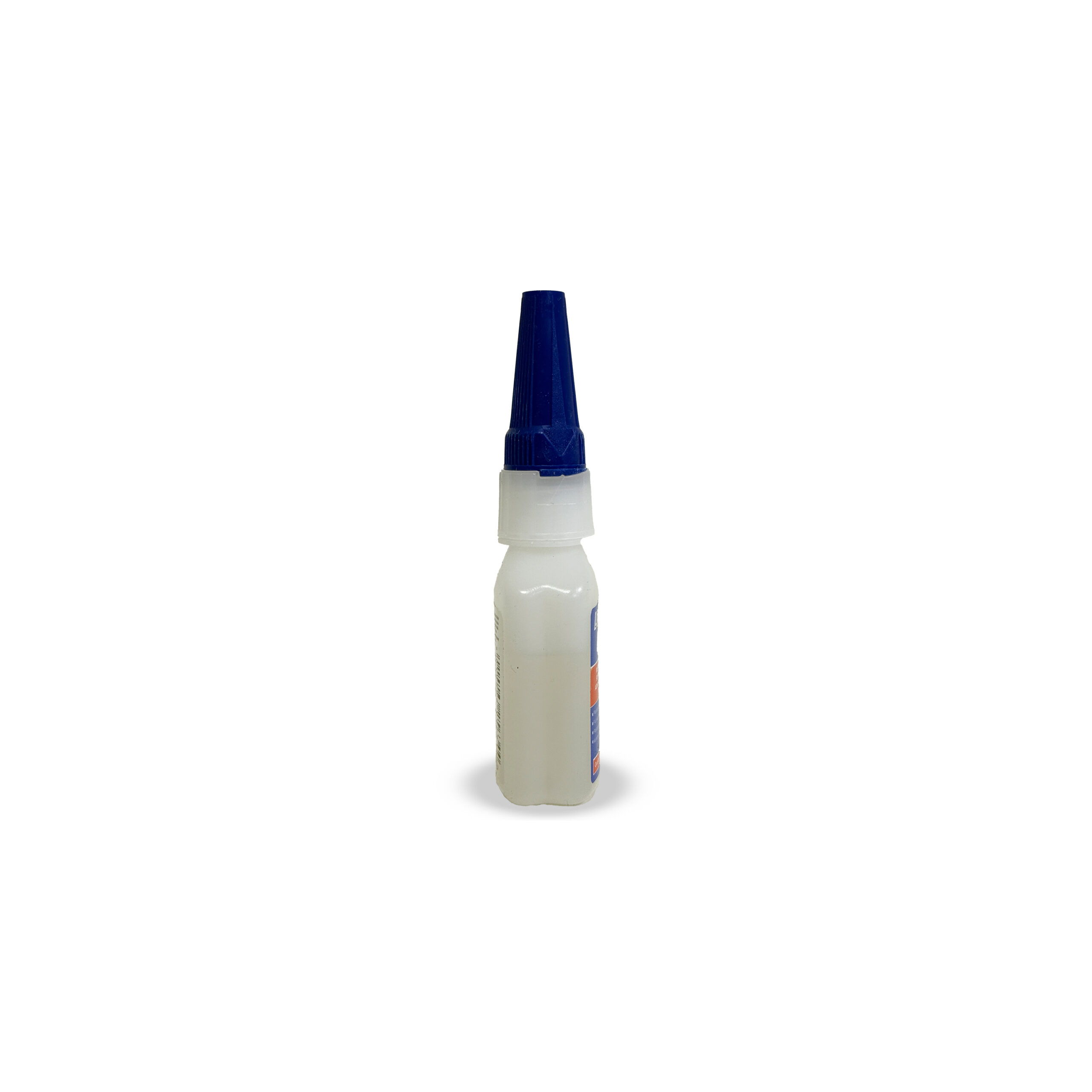
SKU : 401
Pack Size : 20 g
10 Piece per Cartoon
Loctite 401 is a fast-acting, low-viscosity ethyl cyanoacrylate instant adhesive designed for general-purpose and difficult-to-bond materials.
Common Industrial & Commercial Applications
• Electronics & Electrical Assembly: Secures small components, wire tacking, strain reliefs, and plastic housings where fast handling strength is required.
• Automotive & Transportation: Bonds interior trim pieces, rubber weatherstripping, EPDM seals, emblems, and small plastic clips.
• Medical Device Manufacturing: Used in the assembly of disposable medical devices, tubing, and diagnostic equipment (with appropriate ISO 10993 compliant grades).
• Metalworking & Machinery: Fixes rubber bumpers, O-rings, identification plates, and tight-fitting metal-to-metal or metal-to-plastic sub-assemblies.
• Packaging & Paper Converting: Bonds cardboard, heavy paper, and porous packaging materials on high-speed production lines.
Everyday & Workshop Repairs
• Woodworking & Furniture: Repairs hairline cracks, bonds small wooden trim, and attaches decorative inlays without clamping for hours.
• Leather & Footwear: Reattaches detached shoe soles, repairs leather straps, and fixes torn fabric edges.
• Plastics & Household Items: Mends broken ABS plastic casings, appliance knobs, toys, and ceramic figurines with clean, close-fitting breaks.
Where NOT to Use Loctite 401
• Large Gaps: Because of its thin, water-like viscosity, it cannot fill gaps larger than 0.05 mm; use a gel formula like Loctite 454 for uneven surfaces.
• Constant Water Immersion or High Heat: Avoid using it on items exposed to continuous boiling water, steam, or temperatures above 120°C.
• Glass & Glazed Ceramics: Standard cyanoacrylates can become brittle over time on smooth glass due to moisture sensitivity.
If you’re considering Loctite 401 for a specific job, let me know:
• The exact materials and gap size between the parts
• The operating environment (exposure to water, extreme heat, or heavy vibration)
Your one-stop shop for all trading needs

Your one-stop shop for all trading needs
Copyright © 2025 Una Eco Trading, All rights reserved.
Copyright © 2024 UNA General Trading, All rights reserved. Powered by Insprago
WhatsApp us


