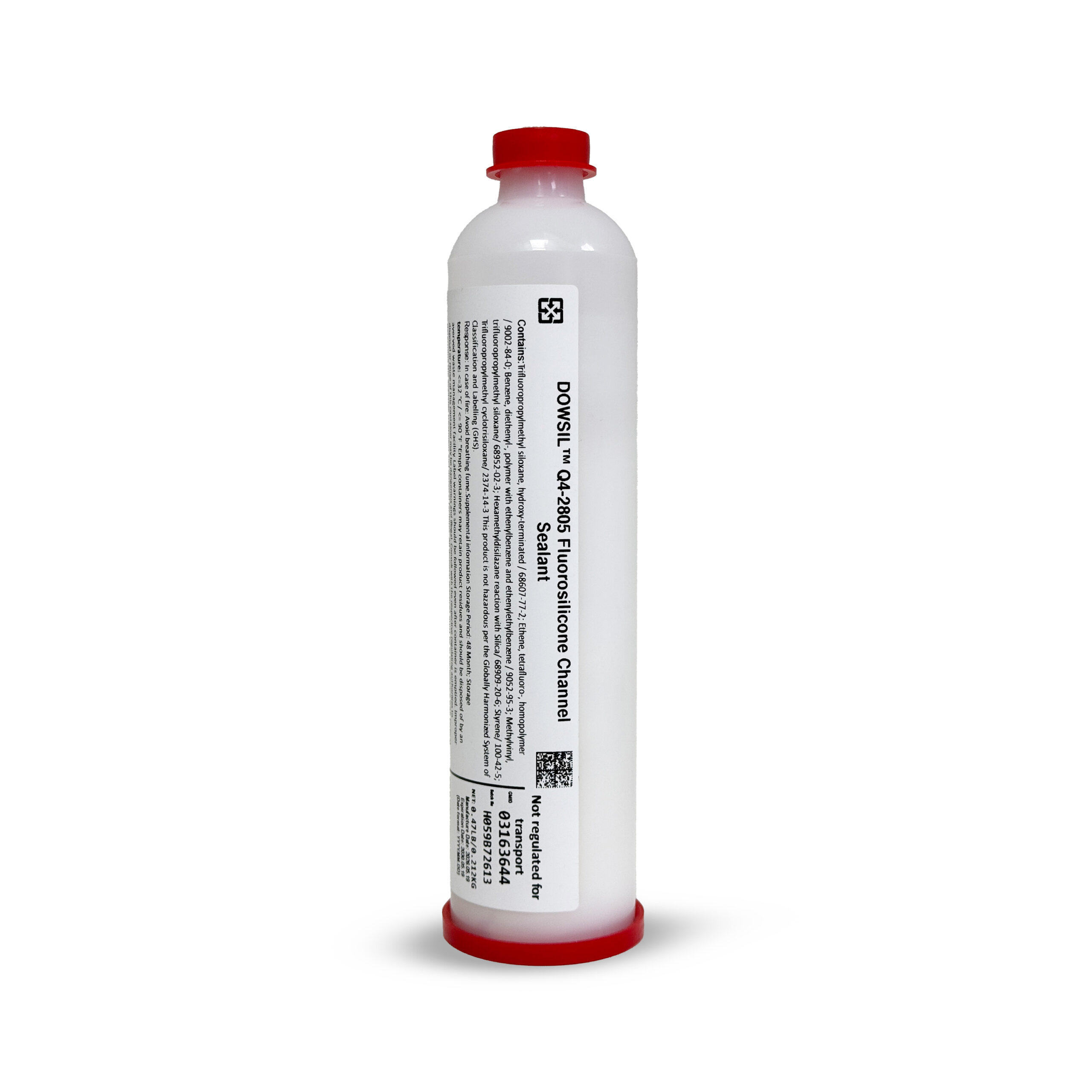
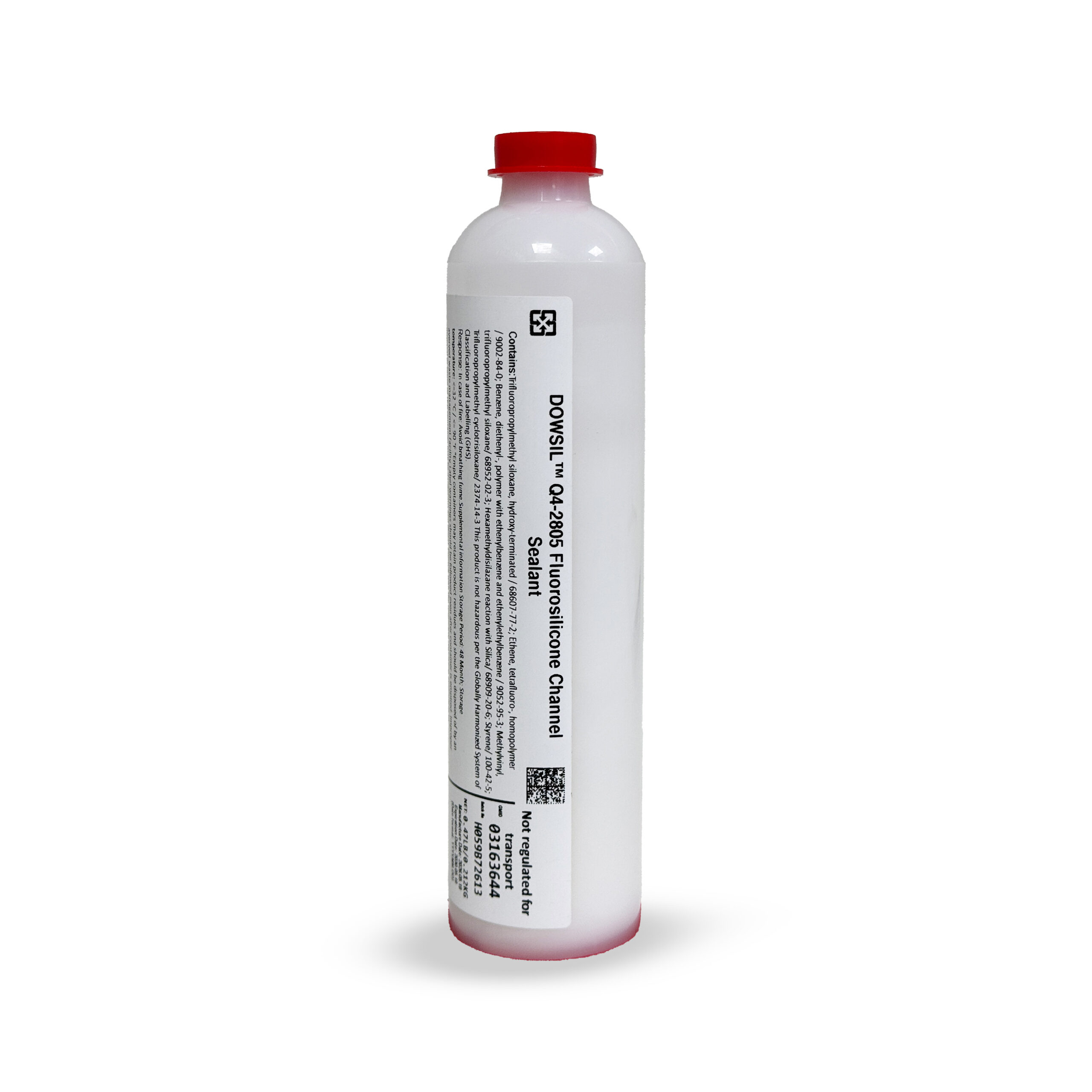
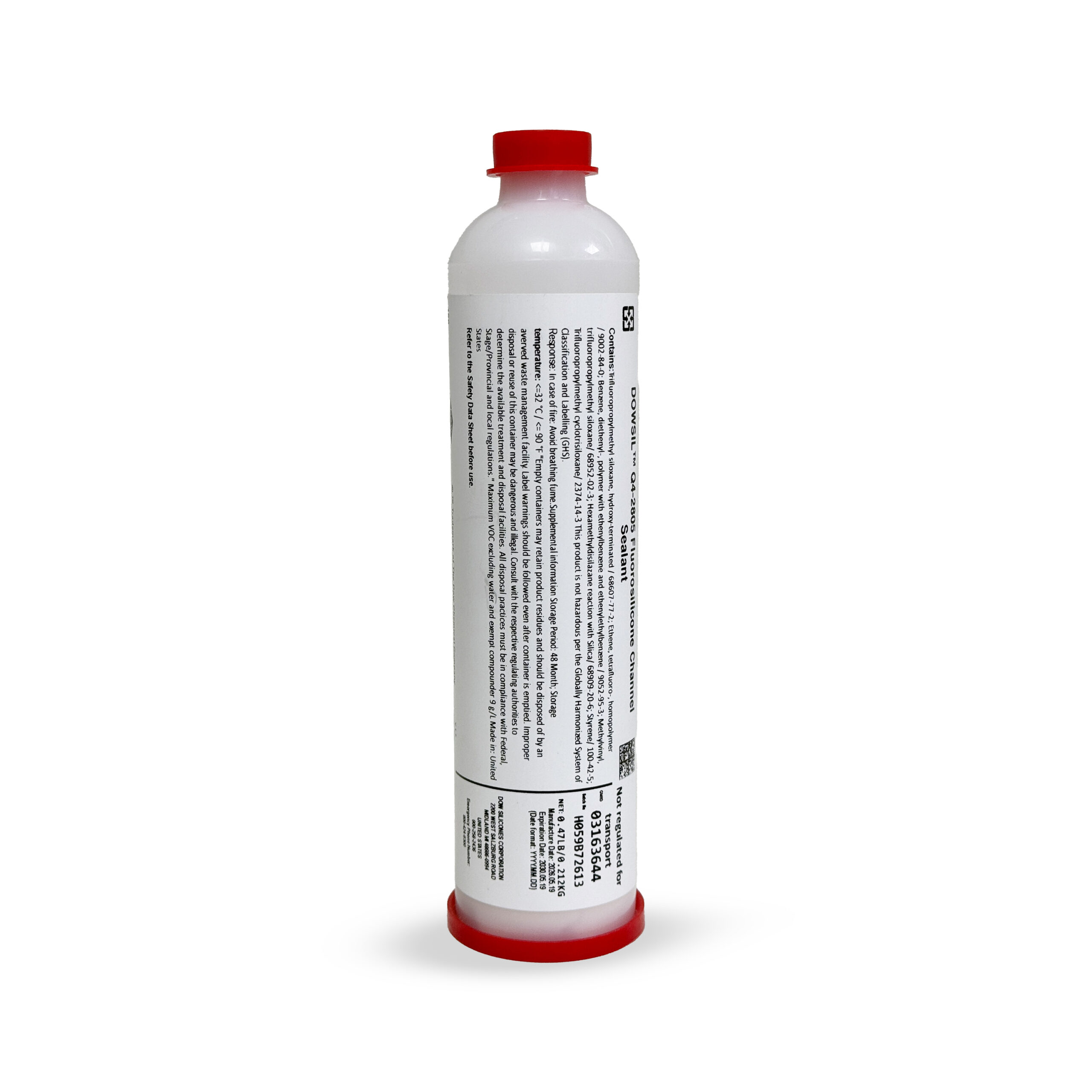
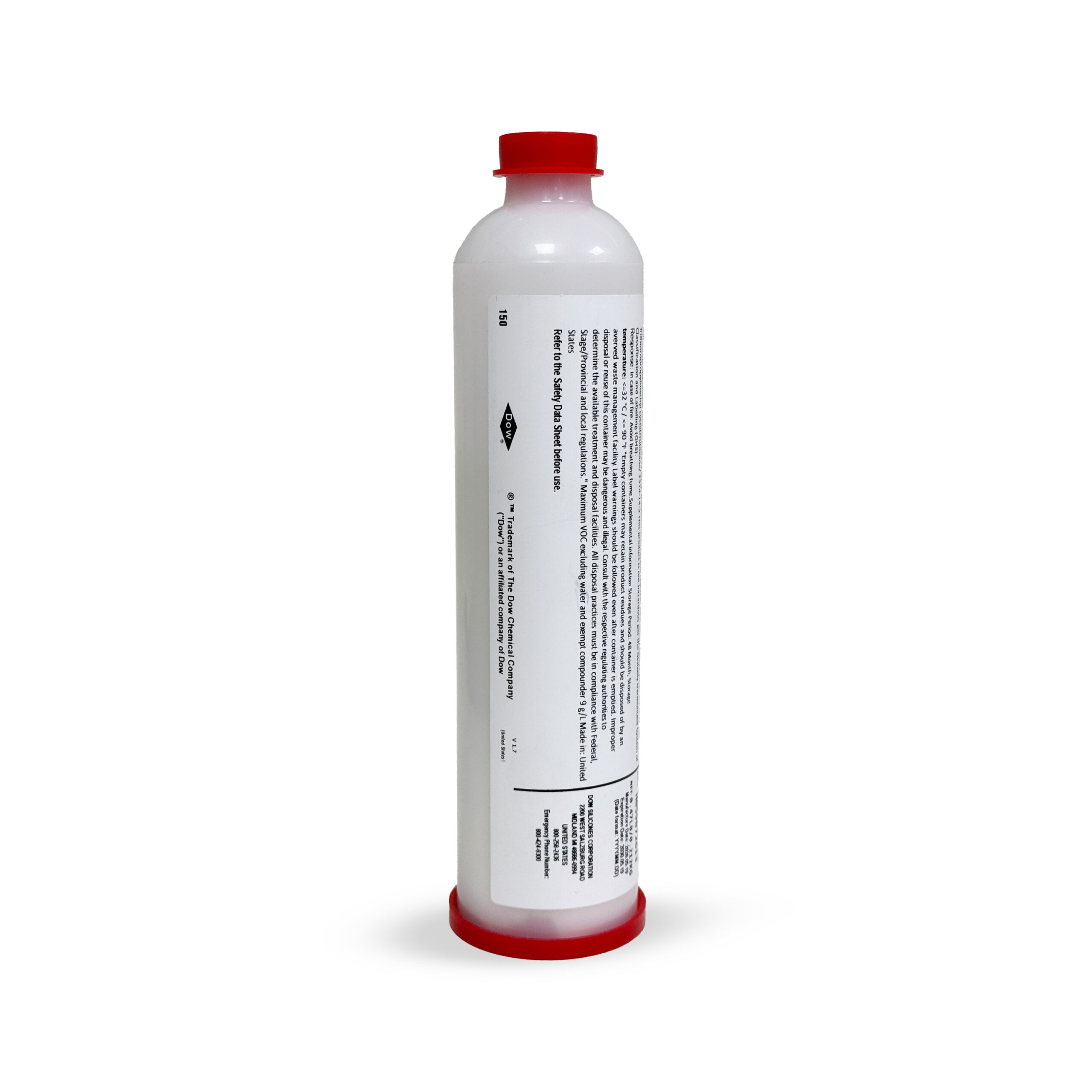
To use DOWSIL™ Q4-2805 Fluorosilicone Channel Sealant, load the ready-to-use compound directly into a pneumatic injection gun and fill fuel tank grooves port-by-port in short sections. Because it is a one-part, non-curing compound containing flow-control particles, no mixing, catalyst, or curing time is required.
1. Equipment Setup
• Select the Dispensing Gun. Use a standard pneumatic air gun (such as a No. 223 Grover air gun) equipped with the appropriate cartridge adapter for the 212 g cartridge.
• Load the Cartridge. Insert the cartridge so the sealant extrudes directly into the gun barrel without introducing air pockets.
• Set Air Pressure. Adjust your air supply to match the airframe manufacturer’s specification (commonly 0.28 MPa / 40 psi to 0.42 MPa / 60 psi).
• Avoid Extension Hoses. Place the gun nozzle in direct contact with the injection port whenever possible, as hoses significantly reduce outlet pressure.
2. Port-by-Port Injection Procedure
1. Open Initial Ports. Start at either end of the wing or fuel tank structure and open the first two injection ports along the groove.
2. Seat the Nozzle. Press the air gun nozzle firmly against the first port to form a tight seal.
3. Fill the First Section. Gun the sealant into the first port until it travels along the channel (typically 10 to 15 cm) and exits cleanly from the second open port.
4. Shift to the Next Section. Close and plug the first port, open the third port, and inject sealant into the second port until it exits the third port.
5. Complete the Groove. Repeat this progressive sequence section-by-section until the entire channel is sealed.
3. Using Extension Hoses (Restricted Access)
If tight structural clearance makes direct nozzle contact impossible, follow these rules from the DOWSIL™ Q4-2805 Technical Data Sheet:
• Minimize Hose Length. Use the shortest possible hose connection between the gun and the port.
• Compensate Pressure. Increase the input air pressure safely within aircraft manufacturer limits to maintain adequate output pressure at the nozzle.
• Shorten Injection Distance. Inject over shorter groove segments to prevent pressure drop and incomplete filling.
4. Inspection and Clean-Up
• Verify Seal Integrity. Confirm that fresh sealant exits each downstream open port before closing it, which verifies a void-free, leak-tight section without forcing sealant past faying surfaces into the fuel tank.
• Remove Excess Material. Wipe away extruded sealant around ports immediately using a clean cloth and a compatible aerospace solvent, and dispose of wipes according to safety regulations.
• Safety Precautions. Wear chemical-resistant gloves and eye protection, work in a well-ventilated area, and keep the material below 180 °C to avoid thermal decomposition vapors.